
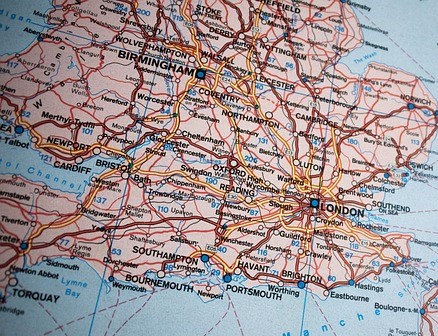
According to the latest data from the Office for National Statistics (ONS), housing affordability has improved slightly in 2025, although it remains diffuse and uneven across regions.
In England, the average house costs £300,000, equivalent to 7.6 times the average annual income (£39,300), down from 7.8 in 2024.
In Wales, the average price of £213,000 is equivalent to 6.0 times earnings (£35,800), a slight improvement from 6.1.
This change reflects the increase in earnings since 2021 that has outstripped the rise in house prices, with wages rising by about 25% compared to the 5% increase in property values.
Affordability improved in almost two-thirds of local authorities in England and Wales (213 areas), but the situation worsened in 103, highlighting ongoing regional inequalities.
The most affordable areas were Hyndburn and Kingston upon Hull, both with ratios of 4.1, while Kensington and Chelsea remained the least affordable at 25.2.
Regional differences remain clear. In the North East, houses cost around 5.0 times average earnings, compared to 10.5 times in London, where buyers would need an extra £279,000 on top of five times average earnings to buy an average-priced property.
Mary-Lou Press, chair of NAEA Propertymark, said: “The latest data from the Office for National Statistics shows signs of improvement in housing affordability in many areas of England and Wales as earnings begin to exceed house price growth.
“However, from a property professional’s perspective, it reflects a market that is stagnating rather than fully recovering. Affordability remains by historical standards, particularly for first-time buyers, and significant regional disparities are shaping access to home ownership.”
“Wide global economic uncertainty and geopolitical unrest also have the potential to impact inflation, interest rates and supply chains, which could impact housing affordability and market stability in the future,” Press said. “Ultimately, without continued growth in housing supply and continued support for buyers, affordability challenges will remain a major issue in both the sales and rental markets.”
Nick Statman, CEO of Bettermove, highlighted that “the challenge of entering the market still remains significant” for many first-time buyers.
He continued: ““Deposits are a major barrier, while recent reports of lenders pulling mortgage offers below 4% may also impact buyer confidence.”
“Affordability also varies significantly by region, which may help first-time buyers look beyond London to regional cities, where entry prices are lower and overall affordability is more achievable.”
“Improved affordability could sometimes encourage more experienced investors to re-enter the market. However, instead, we are seeing signs that some smaller landlords are reevaluating their portfolios against the new regulatory requirements.”
“We are also seeing more landlords looking for flexible sales routes to exit the market quickly, particularly where the property is rented or where a traditional sale may take longer.”
Van Vogstad, CEO of COHO, the UK shared living marketplace platform, said: “Improving housing affordability does not necessarily mean that housing pressure is easing. In many cases, the opposite dynamic may be in place.
“Home ownership is still out of reach for many people facing rising rents as more landlords look to exit the market.”
“For many, particularly smaller landlords, the complexity and risk associated with regulatory reforms such as the Tenant Rights Act may prompt them to sell.”
“We have recently spoken to more than 10% of our landlords. Government tax and legislative changes mean 70% will be forced to increase their rent prices this year, and a quarter will have to spend between £100,000 and £300,000 over the next five years to ensure their properties meet the minimum EPC Band C standard by 2030.”
“However, this is leading to a gradual commercialization of the rental sector.”