
Awareness of the Tenants’ Rights Act is high – but understanding of what changes it will actually bring to practice is low in the rental sector.
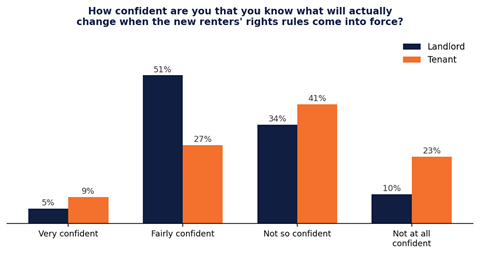
New research from LRG shows that 44% of landlords and 64% of tenants say that despite widespread recognition of the reforms, they are not sure what the legislation will mean once it comes into force.
The findings, published in LRG’s latest Lettings Report and based on a survey of landlords and tenants in England and Wales, highlight a glaring gap between awareness and understanding. While the Act aims to reshape parts of the rental market and strengthen tenant protections, many respondents appear unsure about how the changes will be implemented day-to-day.
Only 5% of landlords describe themselves as “very confident” in their understanding of the reforms, with the majority falling into the “not very” or “somewhat” confident categories. Among renters, confidence is even lower: Only 9% say they are very confident, and only a quarter overall feel quite confident.
The results show that, although the law has been widely discussed, its practical implications are still not fully reaching those most affected. For tenants – whom the reforms are designed to benefit through greater protections and stronger rights – the level of uncertainty is particularly pronounced, raising questions about how effectively the changes have been communicated prior to implementation.
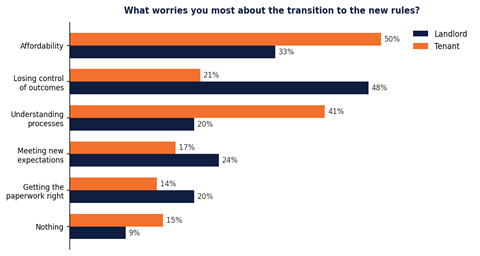
When asked about their biggest concerns about transition, landlords and tenants highlighted very different pressures.
Almost half of landlords (48%) say their main concern is losing control over outcomes, reflecting unease about how periodic tenancies could impact their ability to manage and plan their properties.
For tenants, affordability tops the list, cited by 50%, while 41% also say they are concerned about navigating and understanding new processes.
Despite being affected by the same set of reforms, the findings show that the two groups are interpreting the changes through very different lenses, each focusing on different risks as the legislation moves closer to implementation.