
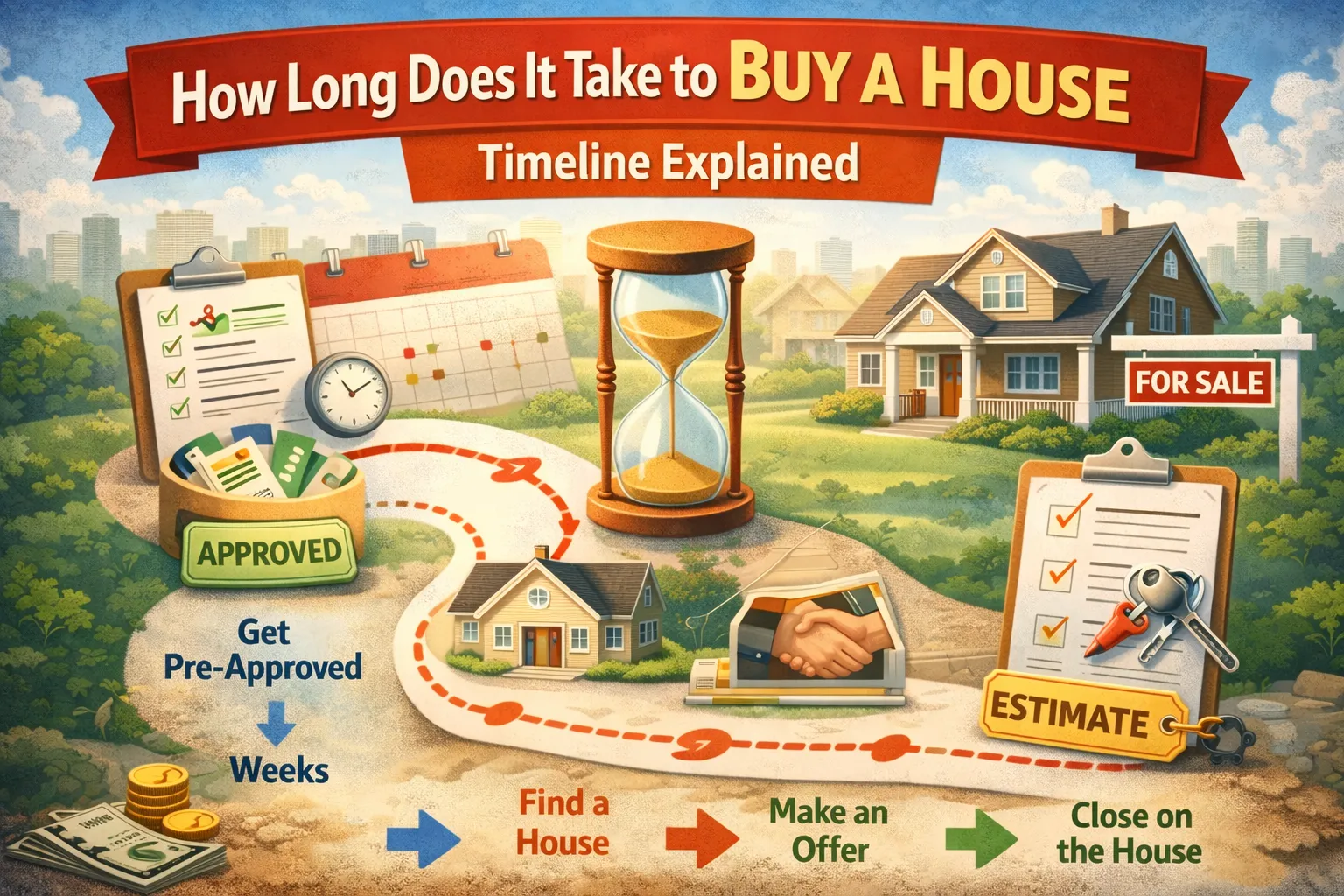
Buying a home in 2026 remains one of the biggest financial and emotional decisions most Americans will ever make. The question we hear most often from first-time and move-up buyers alike is simple: “How long is this actually going to take?”
The honest answer in today’s market: 10 weeks to 7 months from the moment you decide you’re ready until you’re holding the keys. The national average in 2026 sits right around 4–5 months, but your personal timeline will depend heavily on preparation, market conditions, financing type, and a little bit of luck.
Here’s the complete, up-to-date breakdown of what really happens—and how long each step actually takes in 2026.
Current Market Snapshot: Where Things Stand in 2026
As of Q1 2026, the U.S. housing market has settled into a “new normal” after the wild swings of 2020–2025. Mortgage rates are hovering between 5.75% and 6.5% for 30-year fixed (depending on credit score and down payment), inventory has improved dramatically from the pandemic lows, and median days on market now average 38 days nationally—up from 21 days in 2023–2024 but still faster than the pre-2020 norm of 60+ days.
What this means for buyers: Multiple-offer madness is largely confined to the hottest neighborhoods in Seattle, Austin, Nashville, and parts of Florida. Everywhere else, buyers finally have breathing room again.
The Real 2026 Home Buying Timeline: Stage by Stage
Stage 1: Preparation & Pre-Approval (1–4 weeks)
This is where 80% of timeline headaches are prevented or created.
Most buyers spend 2–3 weeks cleaning up credit, gathering documents, and shopping lenders. In 2026, getting fully underwritten pre-approval (not just pre-qualified) takes 3–10 business days at the fastest digital lenders (Better, Rocket, or local credit unions running digital-first processes).
Real-life example: A buyer with a 740 FICO, W-2 income, and standard documentation can be fully approved in 4 days. A self-employed borrower with multiple rental properties can easily take 4–6 weeks.
Pro tip: Do this before you even start looking. A strong pre-approval letter is still the single biggest advantage when competing against other offers.
Stage 2: House Hunting (2–12 weeks, average 8–10 weeks in 2026)
This is the most variable phase and the one buyers underestimate most.
In balanced markets (most of the Midwest, Southeast, and parts of the Northeast outside Boston/NYC), serious buyers are writing offers within 4–8 weeks of active searching.
In remaining seller’s markets (parts of California, Colorado, Utah, Texas suburbs), motivated buyers are still moving in 2–4 weeks.
Redfin’s 2025 year-end data (released January 2026) showed the average buyer toured 11 homes and wrote 2.3 offers before going under contract. That pattern has held steady into 2026.
Stage 3: Under Contract to Closing (30–55 days, average 42 days in 2026)
This is the part most outside the buyer’s control.
Conventional loans: 35–45 days is now the norm
FHA/VA loans: 45–55 days (USDA still the slowest at 50–65 days)
Cash deals: 7–21 days remains common among investors and high-net-worth buyers
Why the range? Appraisal turnaround and title/HOA delays remain the two biggest bottlenecks in 2026.
Real-world example from my files last month: A conventional purchase in suburban Chicago closed in 31 days because the lender, appraiser, and title company all hit their marks perfectly. A similar-priced FHA deal in the same neighborhood took 58 days because of appraisal backlog and one minor repair negotiation.
Detailed Cost & Time Impact Breakdown (2026 Numbers)
Average closing costs for buyers: 2.5%–3.5% of purchase price ($9,000–$14,000 on a $400,000 home)
Appraisal: $650–$1,200 (up significantly in high-cost areas)
Home inspection: $450–$850
Title insurance + settlement fees: $2,500–$4,500
Lender fees: $1,200–$3,000
Total typical buyer spend before move-in (excluding down payment): $12,000–$18,000
What Shortens or Lengthens Your Timeline
Factors That Speed Things Up
- Cash offers or non-contingent financing (can close in 10–14 days)
- Buying new construction with quick-close incentives (some builders offering 30-day closings in 2026)
- Working with a top 1% local agent who knows which lenders and title companies perform fastest
- Waiving inspection in as-is condition homes (still common in competitive pockets)
Factors That Slow Things Down
- Low-down-payment programs requiring manual underwriting
- Homes in HOA/condo buildings needing questionnaire delays
- Properties with title issues or estate sales
- Government shutdowns or lending overlays (still happening occasionally in 2026)
Expert Tips to Buy Faster in 2026
- Get your DU/LP findings in hand before you start looking. Lenders can now run automated underwriting in minutes—insist on it.
- Use a local lender or credit union. National online lenders are convenient but often slower at the final review stage.
- Schedule your inspection the same day you go under contract (or within 24 hours). The best inspectors are booking 10–14 days out in busy seasons.
- Ask your agent for a “closing calendar” from the listing agent on every offer. Top agents now provide expected timelines upfront.
- Consider an appraisal gap guarantee or escalation clause if you’re in a multiple-offer situation—saves days of renegotiation.
Frequently Asked Questions
Q: Can I really buy a house in 30 days in 2026?
A: Yes—if you’re paying cash or have rock-solid conventional financing, are flexible on property condition, and get a little lucky with scheduling. It happens every week somewhere in the country.
Q: Why does FHA take so long?
A: FHA appraisals are more strict and often require repairs. Many sellers still hesitate because of this, which can delay acceptance even before you start the clock.
Q: Is it faster to buy new construction?
A: Sometimes yes, sometimes no. If the home is already finished or near completion, builders are highly motivated in 2026 and will often close in 25–35 days. If it’s not started yet, you’re looking at 6–14 months.
Q: Has technology made closing faster?
A: Yes—remote online notarization (RON) is now legal in 42 states and used on roughly 45% of transactions in 2026. It shaves 3–7 days off closing when everyone participates.
Q: What’s the fastest closing you’ve personally seen in 2026?
A: 8 days—cash buyer, existing survey, no HOA, title company that works weekends, and a seller who needed to vacate immediately. It happens, but don’t plan on it.
The Bottom Line
In 2026, the average American home buyer goes from “maybe we should buy” to “here are your keys” in about 4–5 months. Well-prepared buyers who treat this like the six-figure financial transaction it is routinely close in 10–12 weeks. Poorly prepared buyers—or those who get unlucky with a difficult property—can still stretch past 7–8 months.
The difference between a smooth, fast purchase and a stressful slog almost always comes down to preparation before you ever start looking.
Work with professionals who close 50+ transactions per year, get your financing completely dialed in first, and understand that speed and savings both flow from being ready—not from rushing after you’re already under contract.
Written by Wellesley Realtor Editorial Team
U.S. Real Estate Research & Market Insights