
Selling a home in 2026 remains one of the biggest financial and emotional decisions most Americans will ever make. With mortgage rates stabilizing around 6–6.5%, buyer demand steady in most metros, and inventory still below historic norms, a well-prepared house can sell in days instead of months—and for thousands more than an unprepared one.
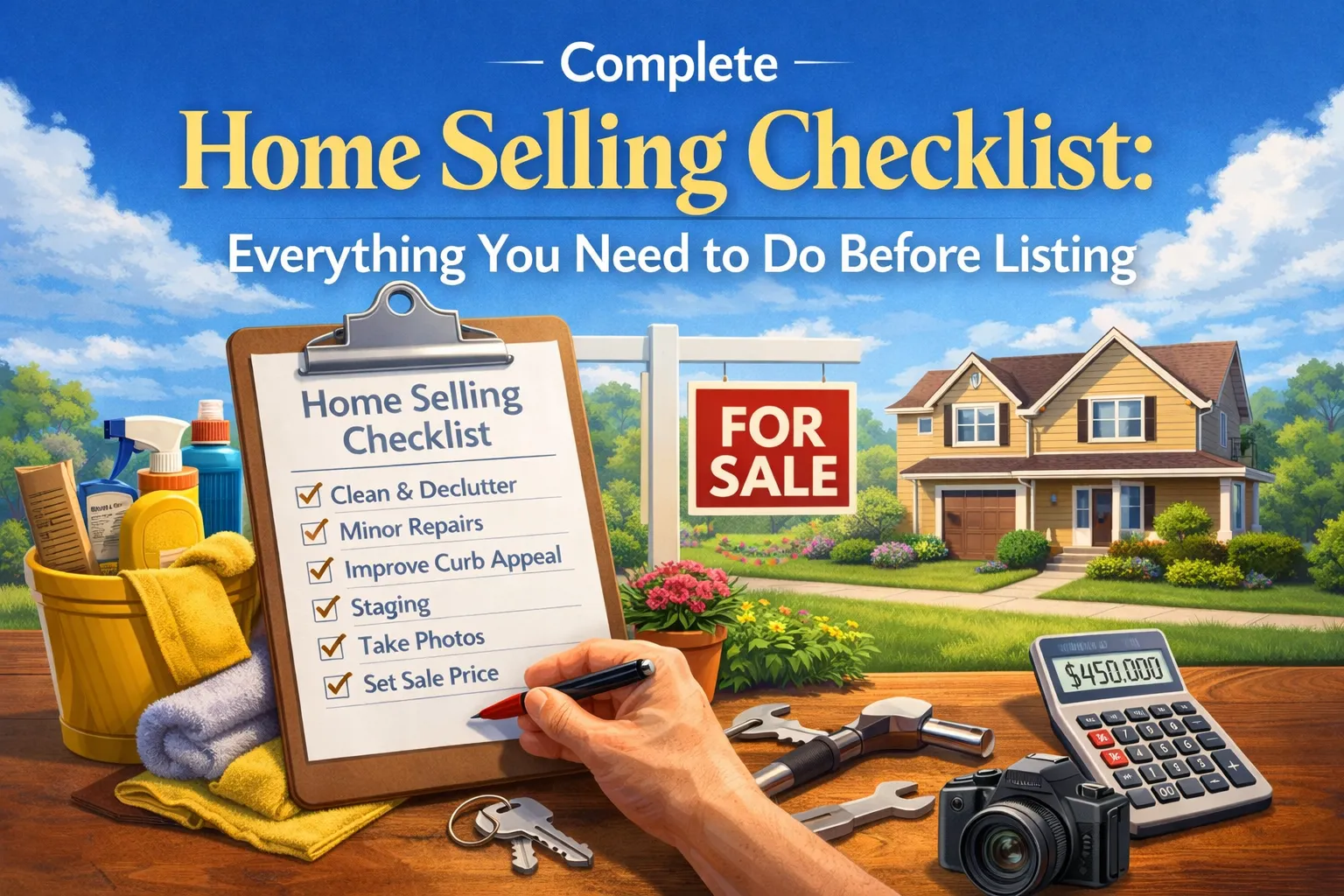
This complete home selling checklist walks you through every step you need to take before your property ever hits the MLS. Follow it, and you’ll avoid the most common (and expensive) mistakes sellers make in today’s market.
Why Preparation Is More Important Than Ever in 2026
The National Association of Realtors’ latest data shows that properly prepared homes sell 23 days faster and for 6–12% more than homes listed “as-is.” In a market where 89% of buyers now start their search online, first impressions are literally everything.
Buyers in 2026 are also more rate-sensitive and picky. They have fewer options than in 2021–2022, so when a great house appears, multiple offers still happen—especially under $750,000 in most suburban markets. The sellers who win are the ones who treat listing prep like a second job for 4–8 weeks.
Step 1: Decide If You Actually Need to Sell Right Now
Before you touch a paint roller, answer these questions honestly:
- Do you have at least 10–15% equity after commissions and closing costs?
- Can you carry two mortgages for 3–6 months if your new home closes first?
- Is your credit score strong enough to qualify for your next purchase?
- Are life circumstances forcing the sale, or is it discretionary?
If the answer to any of these is shaky, 2026 might be a great year to wait or explore alternatives like home equity loans, renting it out, or a lease-purchase.
Step 2: Hire the Right Agent (or Decide to Go FSBO)
Yes, this goes near the top of every complete home selling checklist for a reason.
In 2026, top agents still earn their commission many times over. The average FSBO home sold for $310,000 in the most recent NAR data; agent-assisted homes sold for $405,000—a $95,000 difference.
Interview at least three agents. Ask:
- What’s your list-to-sale price ratio in the last 12 months?
- How many days on market on average?
- Will you pay for staging and professional photography upfront?
- What’s your marketing budget for my listing?
Pro tip: Choose the agent who brings the strongest off-market buyer network and the best photographer, not the one who promises the highest list price.
Step 3: Get a Pre-Listing Home Inspection
This is non-negotiable in 2026.
A pre-listing inspection costs $400–$750 and usually reveals $3,000–$15,000 in issues you can fix proactively. Buyers are requesting repairs on 68% of contracts right now; knowing the problems upfront lets you fix them on your schedule and for less money.
Common surprises: old electrical panels, polybutylene plumbing, missing GFCI outlets, roof life under five years, hidden water damage behind shower tiles.
Step 4: Make Strategic Repairs and Upgrades
Focus only on items that deliver clear ROI.
2026 high-ROI projects (according to Remodeling Magazine’s latest Cost vs. Value):
- Garage door replacement – 193% ROI
- Minor kitchen remodel – 96% ROI
- Vinyl siding replacement – 91% ROI
- New steel front door – 188% ROI
Skip: luxury primary bath remodels, swimming pools, high-end appliance packages (unless your price point is over $1.2M).
Quick fixes that cost under $500 but add thousands in perceived value:
- New house numbers
- Fresh mulch and edging
- Power-wash driveway and siding
- New mailbox
- Paint front door and replace outdoor light fixtures
Step 5: Deep Clean Like Your Sale Depends on It (Because It Does)
Hire professionals. Period.
- Carpets steam-cleaned
- Windows inside and out
- Ducts cleaned if it’s been >7 years
- Grout and tile professionally cleaned
- Every surface, baseboard, and light fixture wiped down
Buyers will open your oven, look inside cabinets, and sniff closets. A single pet or cigarette odor can kill a sale instantly.
Step 6: Declutter Ruthlessly, Then Declutter Again
Rent a storage unit for 60–90 days. Remove:
- 50–70% of furniture (yes, really)
- All personal photos
- Collections, trophies, political/religious items
- Excess kitchen appliances
- Most books from bookshelves
- Everything from garage except cars
Empty space reads as luxury. Clutter reads as “not enough storage.”
Step 7: Stage Professionally (or Stage Like a Pro)
In 2026, 81% of buyer’s agents say staging makes it easier for clients to visualize the property as their future home (NAR).
If your agent offers complimentary staging, take it. If not, budget $2,000–$6,000 depending on home size and whether it will be vacant or occupied.
Vacant homes almost always need full staging—buyers struggle to understand scale without furniture.
Step 8: Order Professional Photography and Video
This is the single most important marketing expense.
2026 standards:
- HDR photos (30–50 images minimum)
- Twilight exterior shots
- Drone aerials
- 3D virtual tour (Matterport or similar)
- Cinematic video walkthrough (Reels/TikTok cutdowns are now standard)
Top agents spend $800–$2,000 on media. Cheap photos = instant scroll-past.
Step 9: Complete All Required Disclosures and Paperwork
Gather now:
- Property tax records (last 3 years)
- HOA docs and fees (if applicable)
- Utility bills (12 months)
- Any permits for past work
- Sewer scope if over 20 years old
- Natural hazard disclosures
- Lead-based paint disclosure (if built before 1978)
- Copies of any warranties still in force
Your agent will need these for the listing packet.
Step 10: Final Walk-Through Prep (The Day Before Photos)
One week before photography:
- Remove all pet items (beds, bowls, litter boxes)
- Hide trash cans and cleaning supplies
- Remove rugs that hide beautiful floors
- Buy fresh flowers and new towels for bathrooms
- Stock guest bathroom with new soap and rolled white towels
The morning of photos:
- Open every blind and turn on every light
- Hide all remotes and chargers
- Make every bed with hotel corners
- Remove shower squeegees and toilet brushes
Cost Breakdown: What Sellers Actually Spend in 2026
Average total seller costs (national averages):
- Agent commission: 5.1–5.5% ($25,500–$27,500 on a $500K sale)
- Staging: $2,000–$6,000
- Professional photography/video: $800–$2,000
- Pre-listing inspection: $450–$750
- Repairs/upgrades: $3,000–$15,000 (varies wildly)
- Cleaning: $400–$800
- Moving/storage: $1,500–$4,000
- Concessions/closing costs: 1–3% ($5,000–$15,000)
Total typical range: $35,000–$65,000 on a $500,000 sale.
But remember: the better you prepare, the higher the sale price—and the more of these costs you recoup.
Expert Tips From Agents Closing 50+ Transactions Per Year
- Never list on a Friday—buyers browse most on weekends; you want maximum first-weekend exposure.
- Price slightly under a round number ($499,900 instead of $500,000) still works in most markets.
- Offer a 30-day rent-back if you need to stay after closing—buyers love it in tight rental markets.
- Remove seasonal decor completely—buyers can’t visualize if it’s screaming Christmas in July.
- Change all light bulbs to the same color temperature (4000K daylight is current favorite).
Frequently Asked Questions
Q: How long before listing should I start this checklist?
A: 8–12 weeks minimum for most homes. 16–20 weeks if major repairs are needed.
Q: Should I repaint the entire interior?
A: Only if colors are bold or walls are marked up. Stick to agreeable greiges (Repose Gray, Agreeable Gray, Edgecomb Gray are still dominating in 2026).
Q: Is it worth replacing carpet with LVP before selling?
A: Almost always yes—new flooring delivers one of the highest ROIs and instantly modernizes the home.
Q: Should I disclose that I had a roof leak five years ago that was fully repaired?
A: Yes. Full transparency builds trust and prevents deal fallout later.
Q: Can I sell “as-is” in 2026?
A: You can, but you’ll leave serious money on the table unless the house needs complete renovation.
Q: When is the absolute best month to list in 2026?
A: Still February–April in most markets. Inventory remains lowest and buyer urgency highest.
Q: Should I get a pre-listing appraisal?
A: Only if you’re in a declining market or your home has truly unique features. Most of the time, the market sets the price, not an appraiser.
The difference between a smooth, profitable sale and a stressful, discounted one almost always comes down to preparation. Use this complete home selling checklist as your roadmap, partner with a great local agent, and you’ll be in the strongest possible position when you hit “publish” on your 2026 listing.
Written by Wellesley Realtor Editorial Team
U.S. Real Estate Research & Market Insights