
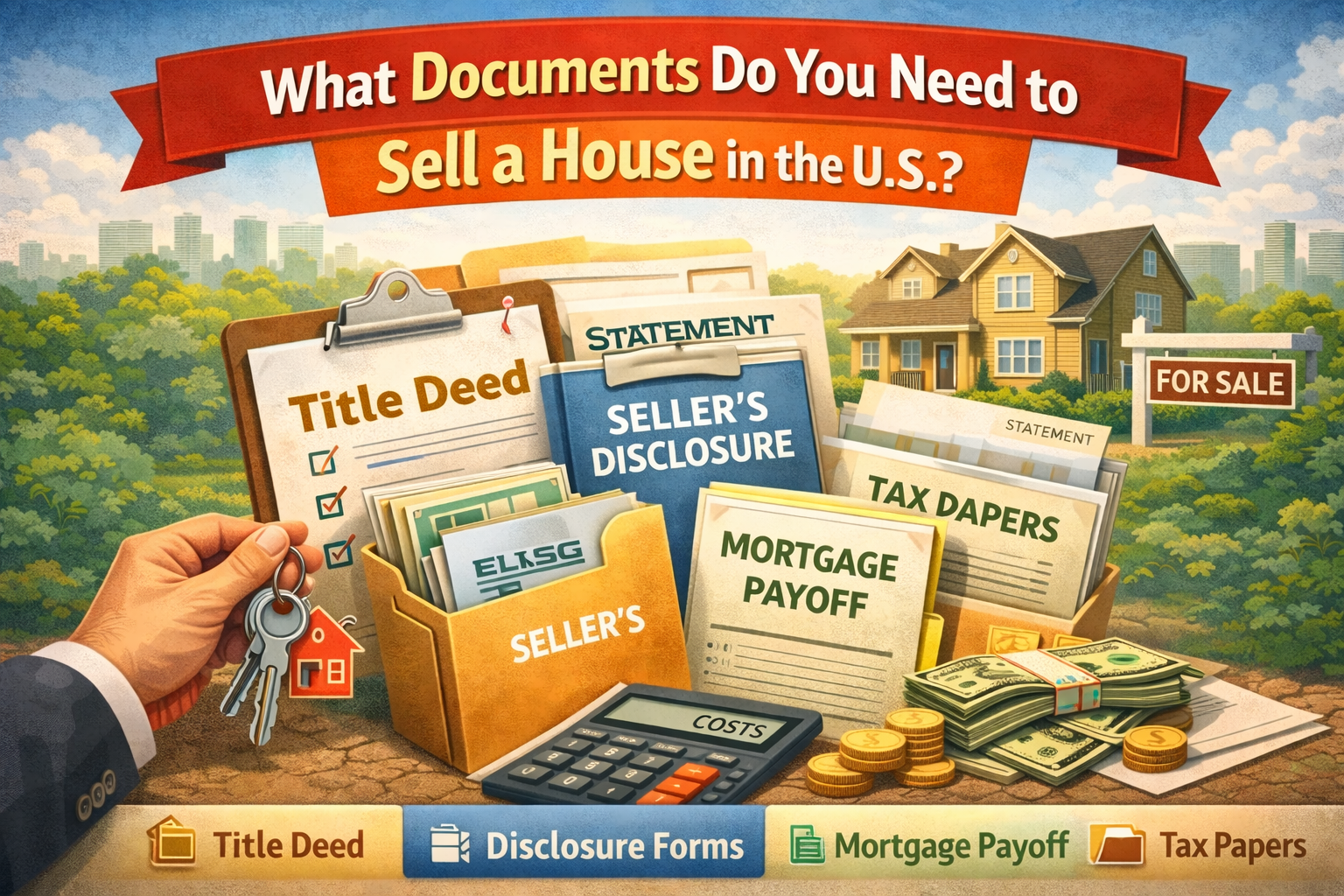
Documents Do You Need to Sell a House : Selling a home in 2026 remains one of the biggest financial transactions most Americans will ever make. The median existing-home sale price is hovering near $412,000 (per NAR data through late 2025), and a single missing or incorrect document can delay closing by weeks—or kill the deal entirely.
The good news? If you gather the right paperwork early, you can close in as little as 21–35 days instead of the national average of 45–50 days. Below is the exact checklist professional agents and closing attorneys use in 2026, broken down by category, with current costs and real-world notes you won’t find on most generic blogs.
Why Missing Documents Are the #1 Cause of Delayed Closings in 2026
According to the 2025–2026 ICE Mortgage Technology Closing Index, 38% of all delayed closings were caused by documentation issues—more than appraisal problems (22%) or financing contingencies (19%) combined.
Buyers are also more cautious in today’s rate environment; many are requiring every possible disclosure upfront to avoid post-closing lawsuits. Having your file complete on day one signals to buyers and their lenders that you’re a serious, low-risk seller.
Core Documents Every U.S. Seller Needs in 2026
These are required in all 50 states (with minor naming differences).
1. Original Deed (or a Certified Copy)
Proves you actually own the property. If you can’t find the original, order a certified copy from the county recorder where the property is located—usually $15–$35 and takes 3–10 business days.
2. Title Report / Preliminary Title Commitment
Ordered by the title company once you’re under contract. Cost: $250–$600 depending on sale price (typically paid by seller in most states in 2026). Shows liens, easements, encroachments, and any clouds on title that must be cleared before closing.
3. Property Tax Certificate / Tax Clearance
Some states call it a “tax estoppel” or “tax status report.” Confirms you’re current on property taxes. Cost: $25–$150 depending on municipality.
4. Mortgage Payoff Statement (Loan Payoff Letter)
Your lender will provide this within 7–10 days of request. Valid for only 10–30 days in most cases, so time it close to closing. In 2026 many lenders now charge $25–$75 for same-day digital delivery if you need it rushed.
5. Seller’s Residential Property Disclosure Form
Required in 48 states (Texas and Alabama are the main exceptions). Must disclose known material defects. In 2026, carbon-monoxide detector compliance, radon testing results (if done), and past insurance claims for storm/wildfire damage are the questions tripping up most sellers.
6. Federal Lead-Based Paint Disclosure (if built before 1978)
Still mandatory under EPA rules. Use the exact HUD form or face a $43,000+ fine. Download the current 2026 version from hud.gov.
7. Homeowners Association (HOA) Documents (if applicable)
- Estoppel/Resale Certificate (shows dues balance, special assessments, capital contributions)
- Governing documents (CC&Rs, bylaws, recent meeting minutes)
- Current budget and reserve study
Cost in 2026: $275–$650 and 10–21 days turnaround in most states. Florida, California, and Texas now cap rush fees at $150–$200 after new 2024–2025 laws.
8. Natural Hazard Disclosure (NHD) Report
Required in California, Oregon, and parts of Washington. Private companies charge $99–$175; California’s new 2025 law requires seismic hazard zones and wildfire risk scoring to be included.
9. Certificate of Occupancy (C/O) or Final Inspection Records
Needed if you finished a basement, added a deck, or did any permitted work without pulling the final sign-off. Cities will not issue a new C/O for resale in 2026 without proof all work was inspected.
10. Home Warranty Policy (optional but expected in many markets)
Buyers love seeing an active 12-month policy at closing. Cost: $450–$750 depending on coverage. Sellers who offer one close 9–12 days faster on average (2025 Redfin study).
State-Specific Documents You Might Still Need in 2026
- New York: STAR Exemption paperwork, Smoke/CO affidavit, Property Condition Disclosure or $500 credit
- New Jersey: Certificate of Smoke Detector, Carbon Monoxide & Fire Extinguisher Compliance (new $500 fine if missing in 2026)
- Florida: Condo Questionnaire (Form 2025 version now 22 pages), Milestone Inspection Report (for buildings 3+ stories, 30+ years old)
- Illinois: Radon Disclosure if tested above 4.0 pCi/L
- Massachusetts (including Wellesley): Title 5 Septic Report if not on town sewer (valid 2–3 years, $450–$850 to renew)
- California: TDS (Transfer Disclosure Statement), SB 721 Deck/Balcony Inspection (for multi-family), and new 2026 Wildfire Smoke & Ventilation Disclosure
Closing Documents You’ll Sign at the Table (or e-Close)
These are prepared by the title company/closing attorney; you don’t bring them, but you should know what they are:
- HUD-1/ALTA Settlement Statement or Closing Disclosure (CD)
- Deed of Conveyance (Warranty Deed, Quitclaim, or Special Warranty depending on state custom)
- Bill of Sale (for personal property staying with the house—appliances, etc.)
- Affidavit of Title / Owner’s Affidavit
- 1099-S Proceeds from Real Estate Transactions (if sale price >$600 the IRS gets notified automatically)
Typical Seller-Paid Document & Closing Costs in 2026 (National Averages)
| Document/Cost Item | Average Cost (2026) |
|---|---|
| Title insurance policy (owner’s policy—often negotiated) | $1,200–$2,800 |
| Title search & exam fees | $300–$600 |
| Recording fees | $125–$350 |
| Transfer tax/stamps (varies wildly by state & county) | 0.1%–2% of sale price |
| HOA resale package & transfer fees | $375–$650 |
| Payoff processing fees (most lenders) | $0–$125 |
| Wire fee (outgoing proceeds) | $25–$50 |
| Attorney/escrow/closing fee | $450–$1,200 |
Total typical seller document-related costs: $2,800–$7,500 (higher in NY, FL, CA).
Expert Tips From Agents Closing 50+ Homes Per Year in 2026
- Start a “Sell My House” folder the day you even think about listing. Scan everything to PDF.
- Order your payoff statement 45 days before listing—lenders are slower than ever.
- Get the HOA estoppel ordered the same week you list; it’s the #1 delay culprit nationwide.
- Pull your own title report for $75–$100 before listing (services like PropertyShark or CoreLogic). You’ll discover old liens you forgot about.
- Use a transaction coordinator (many agents now include one). They chase every document so you don’t have to.
Frequently Asked Questions (2026 Edition)
Q: Can I sell a house without the original deed?
A: Yes, but you’ll need a certified copy from the county plus an Affidavit of Lost Deed in most jurisdictions.
Q: Do I need a survey in 2026?
A: Only if the buyer’s lender requires it or there’s a boundary dispute. New construction or subdivision lots almost always need one ($450–$900).
Q: What if I have a solar lease or PACE loan?
A: Buyer must assume it or you must pay it off. New 2025–2026 CFPB rules require full disclosure on page 3 of the Loan Estimate.
Q: Are electronic signatures still valid?
A: Yes—99% of U.S. closings are now fully digital or hybrid under the 2021 SECURE Notarization Act.
Q: Who pays for the natural hazard report in California?
A: Seller by law, but many agents now negotiate $100–$150 credit instead of the full NHD.
Q: Can I sell “as-is” and skip disclosures?
A: Only in Texas and Alabama for certain circumstances. Everywhere else you must disclose known defects even on as-is sales.
Q: How long are most documents good for?
A: Payoff statements (10–30 days), HOA estoppel (30–60 days), septic reports (2–3 years), survey (5–10 years or until improvements).
Bottom line: The sellers who close fastest and for the most money in 2026 are the ones who treat paperwork like a second job for 30 days. Get everything together before you accept an offer and you’ll be the seller every buyer and agent fights to work with.
Written by Wellesley Realtor Editorial Team
U.S. Real Estate Research & Market Insights