
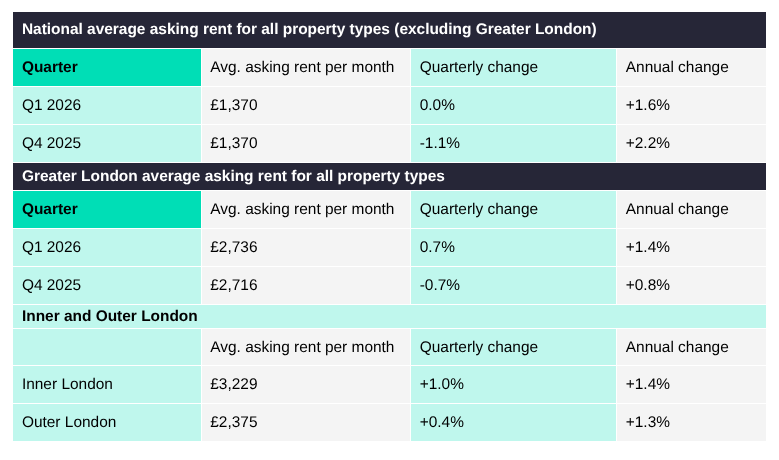
Average rents outside London stabilized in early 2026, marking the first time since 2017 that prices failed to rise between the last quarter and the first quarter of last year.
Data from Rightmove shows that advertised rents outside the capital remained unchanged in Q1 at £1,370 per calendar month, although they are still 1.6% higher than a year earlier – the slowest annual rise since 2018.
In London, rents continued to rise, rising 0.7% during the quarter to £2,736 per month, although remaining below the peak seen in the third quarter of 2025.
The slowdown in rental growth reflects a more balanced relationship between supply and demand, with tenants facing affordability limits after several years of rapid growth. Also, the modest increase in available stock has reduced competition.
The number of homes available for rent is now 3% higher than a year ago and the highest level for this time of year since 2021. However, there has been no increase in new listings since before the Tenants’ Rights Act went into effect on May 1, with new rental properties in March falling 6% from a year earlier.
Demand pressure has also reduced. The average rental property now receives eight enquiries, down from 11 a year ago and well below the peak of 29 recorded in 2022, though still above pre-pandemic levels.
Pricing has become more sensitive as a result, with 26% of rental listings seeing a reduction in advertising time – the highest proportion recorded since Rightmove began tracking the measurement in 2012.
Recent lending data suggests some support for supply, with UK Finance reporting that the total number of buy-to-let loans at the beginning of 2026 was 14% higher than at the beginning of 2025, including an 18% increase in remortgage year-on-year. However, this data only covers January and is before the recent rise in borrowing costs.
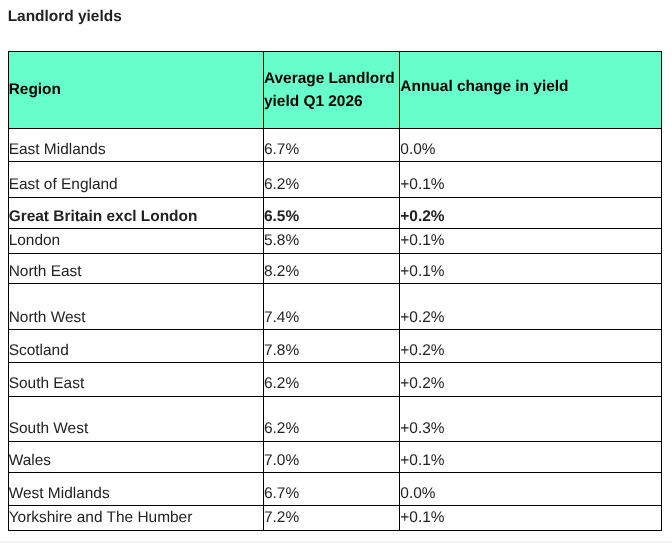
Rightmove said rising mortgage rates to buy-to-let since the start of the war in Iran are putting further pressure on landlords. The average two-year rate for a homeowner buying with a 25% deposit is now 5.79%, up from 4.86% before the conflict.
Colleen Babcock, property expert at Rightmove, said: “Rents remaining stable this quarter reflects how affordability has increased, but also that supply and demand are more balanced. With more homes available to rent and less competition between tenants, landlords need to position the right rent in the current market to secure a tenant.
“As market conditions rebalance, homes are taking longer to rent. The market is more price sensitive, requiring landlords to be realistic from the outset to secure a tenant and minimize the risk of void periods.”
Babcock said: “Before the Tenant Rights Act came into force, the data does not suggest a single or immediate response from landlords. Instead, behavior appears to be more cautious and thoughtful, with many focused on long-term tenancies, pricing and avoiding void periods in a more balanced market.
“It is still early days, but the most immediate change due to the war in Iran is some significant increase in borrowing costs for landlords, who may come into the market at a later stage.”